IoT: Mobile Robots & Long-Range Sensor Tags

IoT: Mobile Robots & Long-Range Sensor Tags

2015

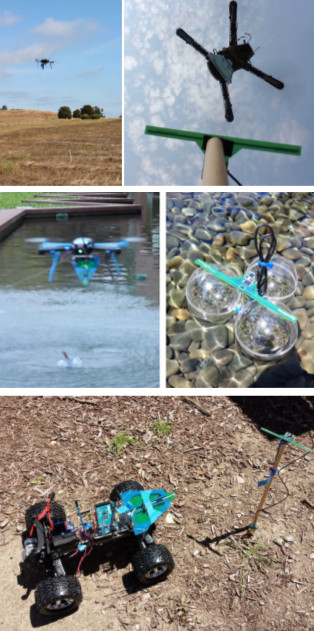
A shared vision for the Internet of Things wherein mobile readers (robots or mobile phones) interact with smart objects — objects with embedded microelectronics that perform computation, sensing, communication, energy storage, and power harvesting. Using autonomous mobile robots outfitted with UHF RFID readers, I explored applications including soil moisture sensing, remote crop monitoring, infrastructure monitoring, water quality monitoring, livestock monitoring, and remote sensor deployment.
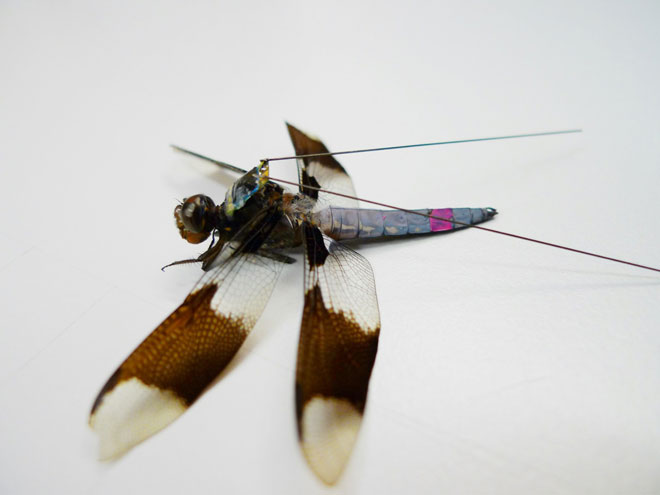
Cyborg Dragonflies: In-Flight Neural Sensing

Cyborg Dragonflies: In-Flight Neural Sensing

2011 – 2012

As a NSF/CRA postdoc at Duke University, I worked with Dr. Matt Reynolds on cutting-edge wireless backscatter systems: wireless power harvesting and high-speed (5-10 Mbps) wireless data transfer akin to souped-up UHF RFID tags. My work focused on a software-defined radio receiver to decode in real-time the high-speed signals reflected by a custom ASIC. This system was designed to capture and telemeter high-fidelity neural signals from a dragonfly in flight — a real-life 'cyborg dragonfly.' Dragonflies are capable of extreme aerial maneuvers and are one of the few insects that capture prey in mid-flight.

Finding & Navigating to Long-Range Tags in Homes

Finding & Navigating to Long-Range Tags in Homes

2009 – 2014

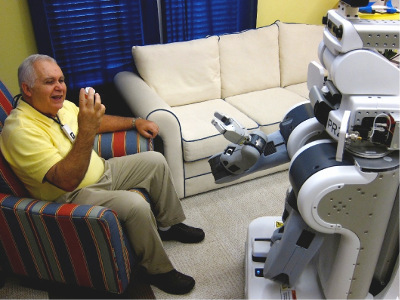
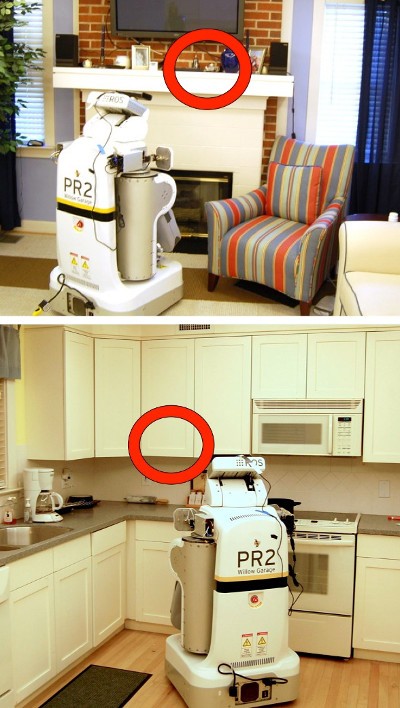
Personal robots with autonomy, mobility, and manipulation capabilities have the potential to dramatically improve quality of life. I developed a new robot sensing modality leveraging UHF RFID tags — developing robot behaviors and probabilistic inference techniques inspired by the radar literature. Users can apply low-cost, battery-free UHF RFID tags to hundreds of objects throughout their homes. The tags provide a unique identifier and receive signal strength indicator (RSSI), enabling a robot to efficiently discover, locate, and interact with tagged objects and people of interest.

Publications (3)
Press Coverage (3)
RFID-Enabled Medication Delivery & Adherence

RFID-Enabled Medication Delivery & Adherence

2010 – 2013

Autonomous mobile robots can improve medication adherence by delivering the right medication to the right person at the right time without undue caregiver burden. UHF RFID sensing is well-matched to this challenge. By tagging medication bottles and having care-receivers carry UHF RFID tags, robots can use the methods I developed to obtain medication and then discover, approach, and administer it. UHF RFID is not subject to lighting limitations of cameras and has a low false positive rate — crucial when consequences of misidentification are dire.

Publications (1)
Press Coverage (2)
Rich Media Tags: Battery-Free Audio, Video & Health Sensing

Rich Media Tags: Battery-Free Audio, Video & Health Sensing

2011 – 2013

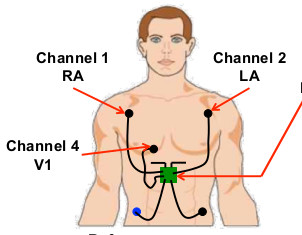
Contrary to common perceptions, backscatter UHF RFID tags at 915 MHz can support very high datarates (up to 100 Mbps), even under passive (battery-free) conditions. Using the same IC developed for the cyborg dragonfly, my colleagues and I at Duke developed battery-free tags that could simultaneously stream video and stereo audio. We also developed tags providing multi-channel ECG. These tags illustrate applications of custom backscatter tags that weren't previously thought possible.

Publications (2)
Wireless Power: Robot Swarms & Mobile Devices

Wireless Power: Robot Swarms & Mobile Devices

2007 – 2008

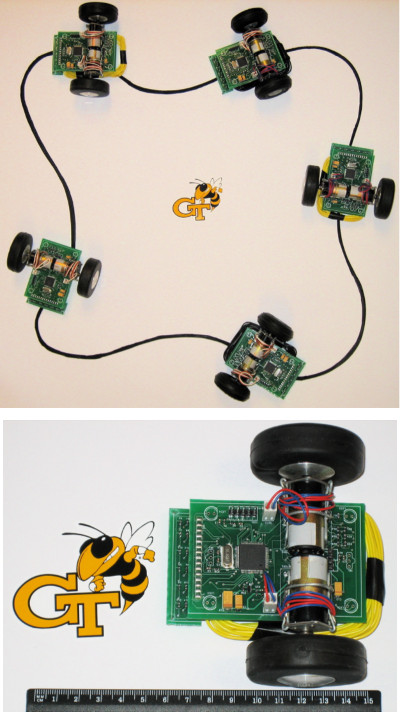
Matt Reynolds and I brainstormed: 'What if we used LF RFID (125 kHz) to make a wirelessly-powered robot swarm, where the robots are effectively power-harvesting tags? The robots could run forever!' So we built it, complete with bidirectional communications. We extended the system to wirelessly recharge mobile devices when placed on a table or in a specially-modified backpack. A variation on this technology is now commercially available as Duracell PowerMat and Qi wireless chargers.

Publications (2)
Press Coverage (2)
Short-Range UHF Readers for Robot Manipulation

Short-Range UHF Readers for Robot Manipulation

2010 – 2013

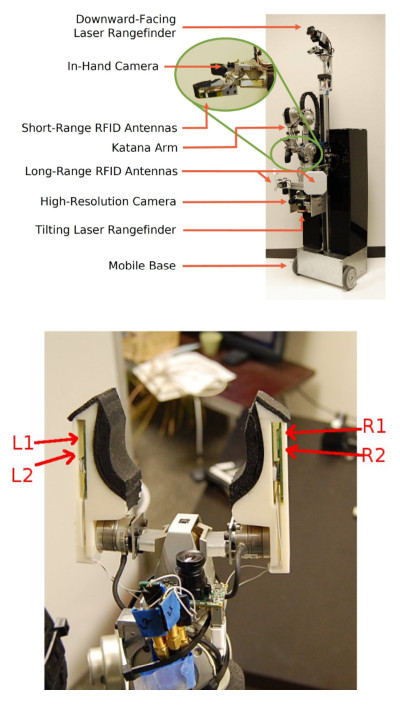
I designed and constructed a unique multi-antenna RFID reader embedded in a robot's manipulator, specially designed to operate with ordinary UHF RFID tags in a short-range, near-field electromagnetic regime. This atypical mode allowed the system to interact with long-range (6+ meter) UHF RFID tags at distances less than 1 meter. This sensor allowed a robot to identify objects in and around its gripper with near certainty, enabling 'pre-touch' capabilities such as servoing to grasp an object.

Publications (1)
Holonomic Mecanum Robot Base

Holonomic Mecanum Robot Base

2009 – 2010

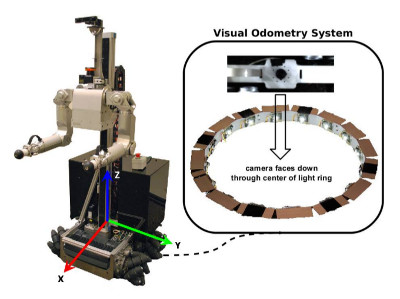
An omnidirectional Mecanum base ('Swedish Wheels') allows for more flexible mobile manipulation. However, slipping of the Mecanum wheels results in poor dead-reckoning. We built a Mecanum base with a downward-facing camera and light ring to provide robust visual odometry. We demonstrated that visual odometry estimates were sufficient for closed-loop PID and LQR controllers, providing high-fidelity odometry for an omnidirectional mobile base used in cutting-edge manipulation research (door opening, manipulation in clutter).

Publications (1)
Dusty: Custom Robot End Effectors

Dusty: Custom Robot End Effectors

2008 – 2009

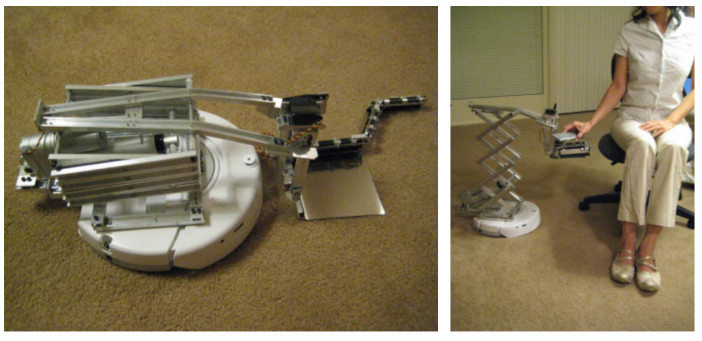
We developed a novel 'dust pan' end effector capable of robustly picking up a diverse array of everyday handheld objects from the floor and delivering them to users. This straightforward, inexpensive, non-prehensile end effector combined a compliant finger with a thin planar component with a leading wedge that slides underneath the object. We empirically validated our design through 1,096 trials systematically varying object location, type, configuration, and floor characteristics — the end effector succeeded in 95% of trials.

Publications (1)
Press Coverage (1)
Gesture Recognition via Bone Conduction

Gesture Recognition via Bone Conduction

2006 – 2007

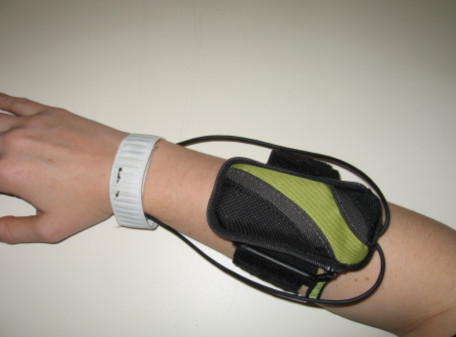
We designed a system using two small piezoelectric sensors placed on the wrist or ankle. When a user moved their hands or feet, the sounds generated travel to the pickups via bone conduction. The system transmitted signals to a mobile device where gestures were recognized using hidden Markov models (HMMs). This was a rudimentary prototype, but pointed toward the future of functional implants (not just wearables) that can create natural, omnipresent human-machine interfaces.

Publications (1)